

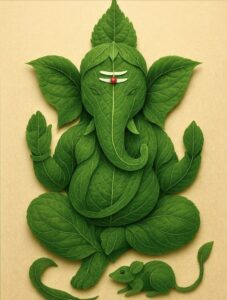
IMAGE CREDITS: https://in.pinterest.com/pin/34621490881467298/
Visit the most unique website on Ucchista Ganapati at Ucchistaganapati.in
( For blogs, videos, sadhana initiations, Pujas, Books, Yantras and Idols of Ucchista Ganapti all at one place)
The Ucchista Ganapati Ashtottara Shatanamavali, commonly known as the Ucchista Ganapati Ashtottaram, is a devotional hymn comprising 108 names that extol the various attributes and virtues of Ucchista Ganapati.
oṃ śvetārkamālāsandīptakandharāya namo namaḥ oṃ
ॐ श्वेतार्कमालासन्दीप्तकन्धराय नमो नमः ॐ
Salutations to the One whose neck is adorned by a garland of śvetārka flowers.
Śvetārka is Calotropis gigantea with white flowers. There’s also a purple variety. The tree with the white flowers is considered more auspicious and Lord gaṇeśa made of the bark of this tree is propitiated in tantric rituals. The roots of this tree also resemble the form of Lord gaṇeśa. The flowers as well as leaves are offered in pūjā rituals for Lord gaṇeśa.
Word-by-Word Translation
-
śveta — white
-
arka — the arka plant (Calotropis gigantea)
-
mālaya — garland, wreath made of flowers
-
kaṇṭha — neck
-
āya — to the One who possesses
namo namaḥ — repeated reverence
Literal meaning:
To the One who wears a garland of white arka flowers around His neck.
Commentary
This verse highlights a powerful and lesser-known aspect of Gaṇapati worship rooted in tantric tradition rather than mainstream temple practice.
1. Śvetārka — the sacred Calotropis
The white-flowered Calotropis gigantea is revered for its pure, austere, and fiercely protective vibration.
Unlike the purple variety, the white one is linked to:
-
sharp clarity
-
warding off malevolent energies
-
deep-rooted spiritual strength
Tantric texts describe Śvetārka as a plant that carries solar potency, making it ideal for deities like Ganapati who govern primal power and removal of obstacles.
2. The deity carved from its bark
Tradition holds that an idol of Ganesha carved from the bark or root of the Śvetārka plant becomes an extremely powerful yantric presence.
Such a mūrti is believed to:
-
attract wealth
-
protect against graha disturbances
-
accelerate siddhis
-
remove deep karmic blockages
This verse subtly points to the esoteric identity of Ucchista Ganapati, whose worship goes beyond common rituals.
3. Roots that resemble Lord Ganapati
The natural form of the Śvetārka root often splits into contours that resemble Ganesha’s elephant head and large belly.
This is seen as a sign of spontaneous divinity emerging in nature—a self-formed, self-revealed form (svayambhū).
4. The garland around His neck
The garland symbolizes:
-
honor and sovereignty
-
protection and purity surrounding the voice (kaṇṭha)
-
the sealing of mantric power
A deity whose neck is adorned by Śvetārka is one who carries an aura that repels obstacles before they even arise. This is preventive grace, not corrective grace.
5. Deeper Tantric Significance
Ucchista Ganapati wearing this garland indicates:
-
mastery over surya-tattva (solar radiance)
-
ability to burn karmic heaviness
-
potency to strengthen the sādhaka’s prāṇa
-
authority to dissolve dense energies in Vamachara rituals
This nāma reveals Ucchista Ganapati as the guardian of raw, untamed spiritual fire—the kind that protects, purifies, and empowers in equal measure.
Discover more from Dr Pallavi Kwatra
Subscribe to get the latest posts sent to your email.