

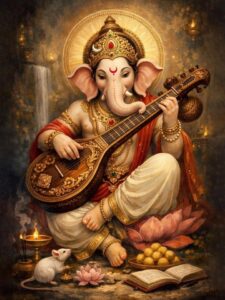
oṃ sindūritamahākumbhasuveṣāya namo namaḥ oṃ
ॐ सिन्दूरितमहाकुम्भसुवेषाय नमो नमः ॐ
Word-by-Word Translation
- oṃ — primordial vibration, source of manifestation
- sindūrita — smeared with sindūra (vermilion), anointed in red sacred powder
- mahā — great, vast, exalted
- kumbha — pot, vessel, rounded form; here symbolizing Gaṇeśa’s great belly and cosmic fullness
- su–veṣāya — to the One beautifully adorned or magnificently attired
- namo namaḥ — repeated salutations and surrender
- oṃ — sealing the mantra into unity
Literal meaning:
Salutations to the One beautifully adorned with vermilion upon His great rounded form.
Commentary
This verse invokes one of the most recognizable and powerful visual forms of Gaṇapati — the deity covered in glowing sindūra (vermilion), radiating vitality, auspiciousness, and tantric force.
1. The Sacred Significance of Sindūra
Sindūra is not merely decorative.
In Gaṇapati worship, vermilion represents:
- activated śakti
- life-force
- auspiciousness
- prosperity
- embodied divine power
The red-orange hue corresponds to:
- the rising sun
- awakened kuṇḍalinī
- the fire of manifestation
Ucchiṣṭa Gaṇapati covered in sindūra signifies divinity fully immersed in living energy rather than abstraction.
2. The Meaning of “Mahā Kumbha”
The word kumbha literally means:
- pot
- vessel
- container
Here it refers to Gaṇapati’s:
- vast belly
- cosmic fullness
- capacity to contain universes
The body becomes the cosmic vessel of existence.
In tantric symbolism, the kumbha also represents:
- the womb of creation
- containment of nectar (amṛta)
- spiritual abundance
Thus, Gaṇapati is both:
- the container of the cosmos
- and the overflowing source of blessings.
3. Suveṣa — Beautifully Adorned
The verse emphasizes not only power but radiant presentation.
Gaṇapati’s beauty here is not fragile elegance—
it is:
- fullness
- abundance
- embodied sacredness
His vermilion-covered form expresses a spirituality that is:
- alive
- sensual
- materially present
- energetically charged
This is central to the Ucchiṣṭa tradition:
the Divine is not distant from embodiment—
the body itself becomes sacred presence.
4. Tantric Interpretation
In tantra, applying sindūra to the deity symbolizes:
- energizing consciousness into manifestation
- invoking active śakti
- awakening dormant potential
Meditating upon this form of Gaṇapati can symbolize:
- activation of creative force
- attraction of prosperity
- energizing spiritual practice
- strengthening grounding and vitality
The red hue also links Ucchiṣṭa Gaṇapati with:
- Lalitā Tripurasundarī
- Śakti worship
- Vāmācāra currents of tantra
5. Yogic Symbolism
The vermilion body corresponds to:
- the mulādhāra chakra
- foundational stability
- rootedness in existence
Gaṇapati presides over this center as:
- guardian of foundational energy
- stabilizer of prāṇa
- remover of energetic obstruction
Thus, the sindūra-covered form is not merely visual devotion—
it is a map of awakened embodied consciousness.
Spiritual Significance
- True spirituality does not reject embodiment; it sanctifies it.
- The Divine can shine through fullness, color, vitality, and form.
- Gaṇapati’s vermilion radiance represents awakened life-force aligned with consciousness.
✨ Verse 72 reveals Ucchiṣṭa Gaṇapati as the vermilion-hued cosmic vessel — radiant with śakti, abundance, vitality, and the sacred fullness of embodied existence.
Discover more from Dr Pallavi Kwatra
Subscribe to get the latest posts sent to your email.