

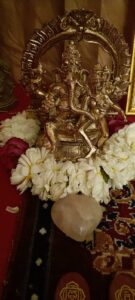
IMAGE CREDITS: Drpallavikwatra.com
Visit the most unique website on Ucchista Ganapati at Ucchistaganapati.in
( For blogs, videos, sadhana initiations, Pujas, Books, Yantras and Idols of Ucchista Ganapti all at one place)
The Ucchista Ganapati Ashtottara Shatanamavali, commonly known as the Ucchista Ganapati Ashtottaram, is a devotional hymn comprising 108 names that extol the various attributes and virtues of Ucchista Ganapati.
oṃ pāśāṅkuśadhanurbāṇamaṇḍitāya namo namaḥ oṃ
ॐ पाशाङ्कुशधनुर्बाणमण्डिताय नमो नमः ॐ
Salutations to the One who’s adorned with a goad, noose, bow and arrow. Each of the weapons of Lord gaṇeśa and their worship can rid of us of karmic defects and lead us to material and spiritual happiness. These same weapons are also held by Lalita Devi.
Word-by-Word Translation
- oṃ — the primordial sound, the source of all creation and consciousness
- pāśa — the noose
- aṅkuśa — the elephant goad
- dhanuḥ (dhanur) — the bow
- bāṇa — arrow
- maṇḍitāya — to the One who is adorned, decorated, or equipped with
- namo namaḥ — repeated salutations and complete surrender
- oṃ — the sacred seal of the mantra
Literal Meaning:
Salutations to the One who is adorned with the noose, goad, bow, and arrows.
Commentary
This verse presents Ucchiṣṭa Gaṇapati as the Divine Master who guides, disciplines, attracts, and ultimately liberates the soul. The four implements He carries are not merely weapons; they are profound symbols of the methods through which divine grace transforms the individual. They also establish the inseparable relationship between Ucchiṣṭa Gaṇapati and Śrī Lalitā Tripurasundarī, who bears the same four emblems.
1. The Pāśa (Noose)
The pāśa symbolizes the power to bind and the power to draw near.
Spiritually, it represents:
- attachment and bondage created by karma
- the ties of worldly existence
- the compassionate rope by which the Lord draws devotees closer to Himself
In tantric symbolism, the noose reminds the sādhaka that the same force that binds the soul to saṃsāra can, through divine grace, become the means of drawing it toward liberation.
2. The Aṅkuśa (Goad)
The elephant goad is a tool of direction rather than punishment.
It signifies:
- spiritual discipline
- mastery over the restless mind
- guidance toward dharma
- awakening from ignorance
Just as a mahout gently directs a mighty elephant with an aṅkuśa, Gaṇapati steers the devotee away from harmful tendencies and towards wisdom and self-realization.
3. The Bow (Dhanuḥ)
The bow represents:
- focused intention
- concentrated will
- readiness for spiritual action
A bow stores energy before releasing it toward a goal. Likewise, spiritual practice gathers one’s inner strength, preparing the practitioner for higher realization.
The bow teaches patience, discipline, and unwavering concentration.
4. The Arrow (Bāṇa)
The arrow symbolizes:
- one-pointed awareness
- penetrating wisdom
- decisive action
- fulfillment of divine intention
Once released, the arrow does not waver from its target.
Similarly, when guided by divine wisdom, the mind moves steadily toward liberation without distraction.
5. The Connection with Śrī Lalitā Tripurasundarī
One of the most profound aspects of this verse is that these four implements are also the principal emblems of Śrī Lalitā Tripurasundarī.
In the Lalitā Sahasranāma, the Goddess is described as holding:
- the sugarcane bow
- five flower arrows
- the noose (pāśa)
- the goad (aṅkuśa)
These symbolize:
- attraction (pāśa)
- discipline (aṅkuśa)
- the power of the mind (bow)
- the five tanmātras or subtle sensory principles (arrows)
Ucchiṣṭa Gaṇapati bearing these same implements demonstrates His complete unity with Śrī Vidyā and the Divine Mother. He is not merely the remover of obstacles but also the wielder of the same transformative powers that govern creation, preservation, dissolution, concealment, and divine grace.
6. Tantric Interpretation
Each implement corresponds to an inner transformation:
- Pāśa removes the bondage of karma by drawing the soul toward the Divine.
- Aṅkuśa disciplines the ego and redirects the mind toward higher awareness.
- Bow symbolizes the focused resolve cultivated through sādhana.
- Arrow pierces ignorance, illusion, and limitation, leading to direct realization.
Collectively, they represent the complete journey of the seeker—from bondage to liberation.
Spiritual Significance
This verse teaches that every obstacle, desire, discipline, and aspiration can become a means of spiritual evolution under the guidance of Ucchiṣṭa Gaṇapati.
His weapons are not instruments of destruction but of transformation. They bind us to divine love, redirect our wandering minds, strengthen our resolve, and pierce the veil of ignorance.
✨ Verse 75 reveals Ucchiṣṭa Gaṇapati as the Divine Guru who wields the noose, goad, bow, and arrow to guide every soul from karmic bondage to both material prosperity and ultimate liberation.
Discover more from Dr Pallavi Kwatra
Subscribe to get the latest posts sent to your email.